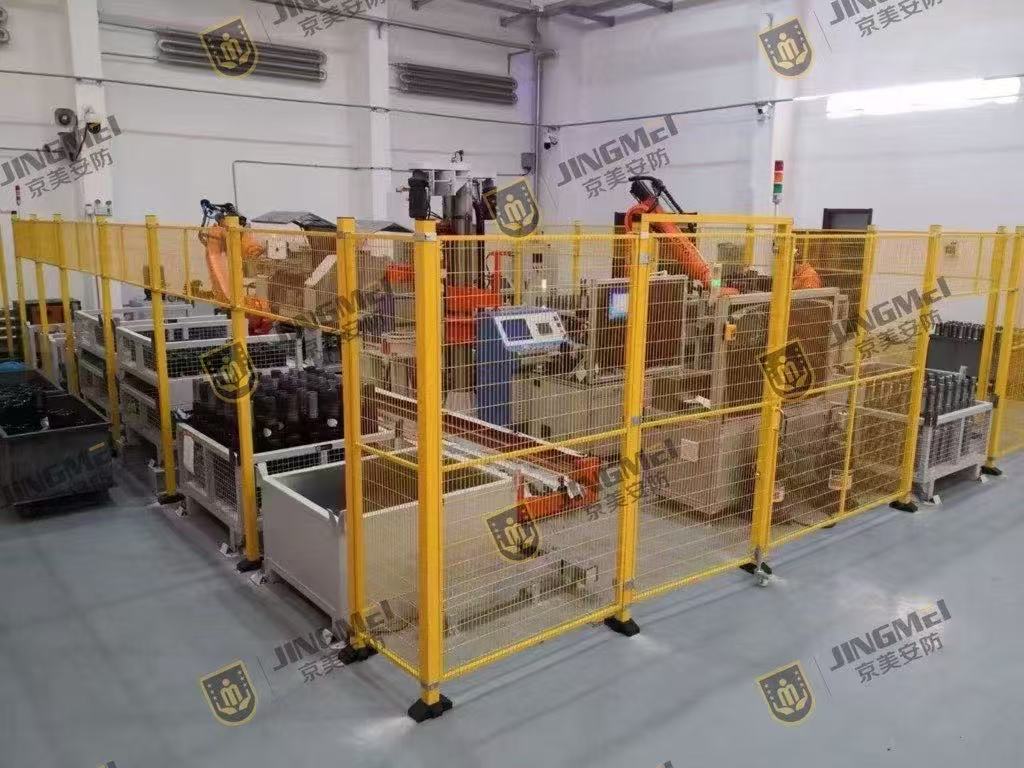
Robot Protective Safety Fence
1.Comply with international/domestic safety standards and avoid compliance risks
2.Proactively isolate high-risk areas
3.Block flying objects and debris
4.Be compatible with safety interlocking devices to achieve "interlocked protection"
5.Flexible structure to adapt to different robot types
6.Not interfere with the normal operation of robots
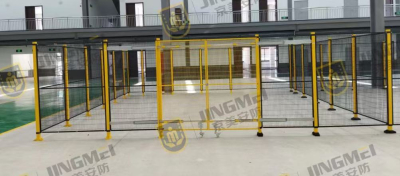
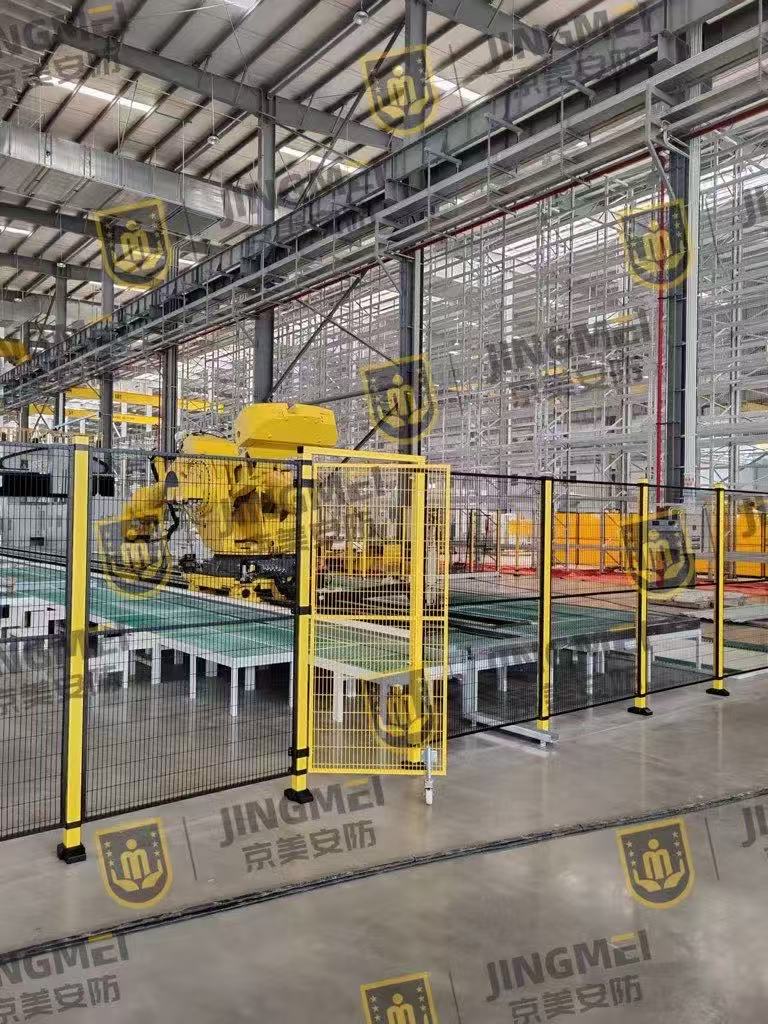
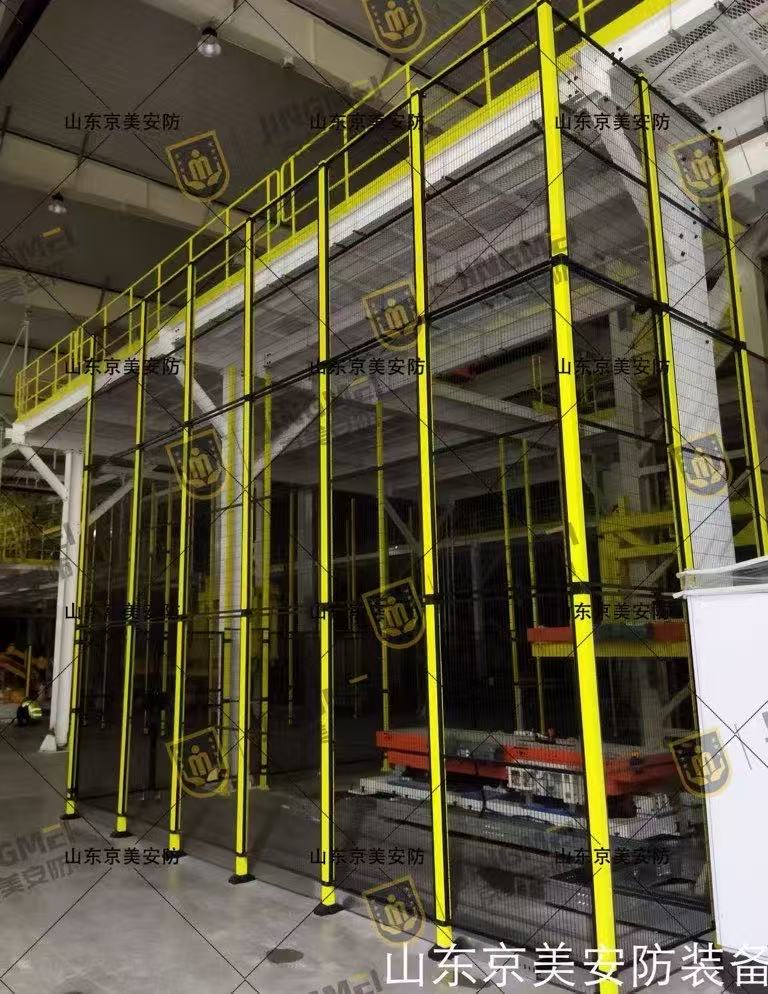
Safety protection barriers are specialized physical isolation devices designed for high-risk industrial scenarios such as robot work areas, heavy equipment operation zones, and automated production lines.
1. Structure Form: Q235 Carbon Steel
2. Column Height: 2200mm/2000mm/1200mm;
3. Square Tube Specification: 60*60*1.5mm
4. Mesh Height: 2000mm/1800mm/1000mm;
5. Mesh Width: 200mm/300mm/500mm/700mm/800mm/1000mm/1200mm/1400mm
6. Frame Specification: 20*20*1.5mm; Grid Spacing: 20*100*3mm
7. Fence Height from Ground: 150mm
8. Spray Coating Color: Column yellow (RAL1023), Single Door Mesh yellow (RAL1023), Fence black (RAL9005), all matte finish
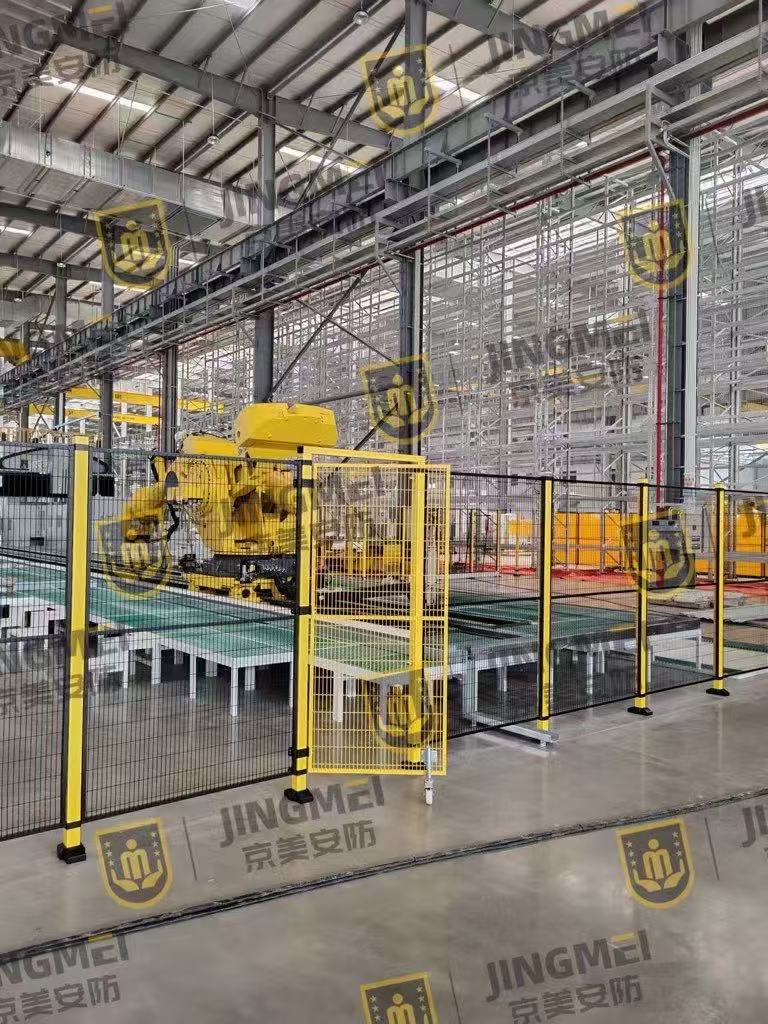
In the automotive body stamping robot workshop, a "thickened Q235 steel plate fence (5mm thick) + double safety interlocking doors" configuration is adopted. The steel plate has an impact resistance of ≥2000N, enabling it to withstand the impact when the stamping robot is accidentally out of control.
The double safety interlocking doors require sequential unlocking (the first door is unlocked by swiping a card, and the second door by fingerprint verification), providing double protection to prevent unauthorized personnel from entering.
Infrared correlation sensors are installed on the top of the fence; if someone attempts to climb over the top, the workshop's audible and visual alarms will be triggered immediately, and the robot will be brought to an emergency stop, forming a "ground + top" full-dimensional protection system.